
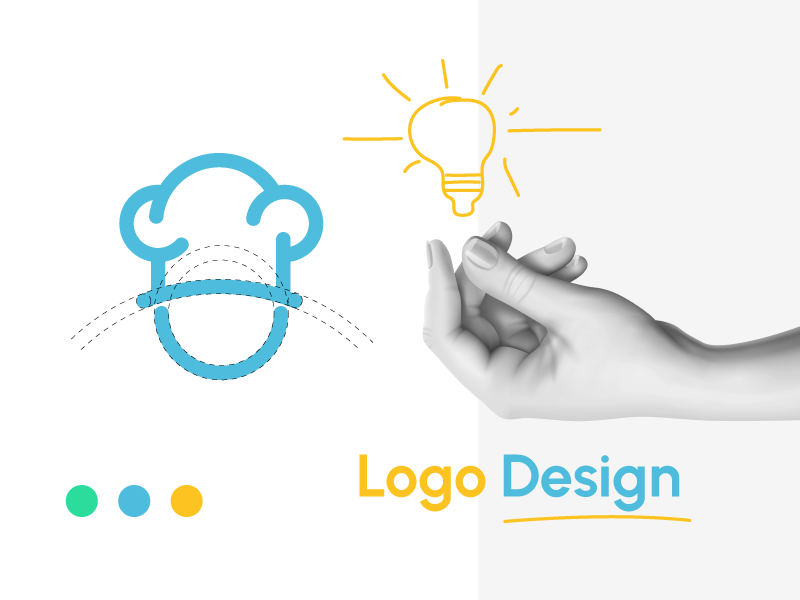
The logo design process top branding agencies follow has eight steps: brand discovery, market and competitor research, strategy and creative direction, concept development, refinement, versatility testing, final delivery and brand system expansion. Each step builds on the one before, and skipping any of them weakens the final logo.
A professional logo is never random. If you are investing in a logo for a serious business, this is the process you should expect, explained step by step with real brand examples.
The Logo Design Process at a Glance
- Brand discovery
- Market and competitor research
- Strategy and creative direction
- Concept development
- Refinement and iteration
- Versatility testing
- Final delivery
- Brand system expansion
1. Brand Discovery
Everything starts with understanding the business before making any design decision. A serious designer asks:
- What does your business actually do?
- Who are your ideal clients?
- How do you want people to see you?
- Who are your competitors?
This feels simple, but it shapes everything that follows. Without it, the logo becomes decoration instead of strategy. The most common mistake is jumping straight to design ideas, which produces logos that look good but don't work.
Example: before Airbnb introduced its "Bélo" symbol in 2014, the company focused on one idea the brand stood for: belonging. That idea shaped the whole identity and turned an abstract shape into a meaningful, recognisable mark.
2. Market and Competitor Research
Next, the designer studies the market the brand operates in:
- competitor logos
- design patterns common in the industry
- visual clichés to avoid
The aim is not to copy, but to find a position that stands out while still feeling right for the industry. A strong logo fits its sector, avoids looking generic and is instantly distinguishable.
Example: most logistics brands use trucks, globes or obvious arrows. FedEx hid an arrow in the white space between its letters, a sign of movement and speed that fits the industry without being obvious.
3. Strategy and Creative Direction
Now the thinking narrows. The designer decides:
- the type of logo (wordmark, symbol, monogram, combination or emblem)
- the visual tone (minimal, bold, elegant, playful or corporate)
- the overall direction for the brand
This removes guesswork. Cheap design says "let's try something"; professional design says "this is why we are doing this".
Example: Apple's direction is minimal, clean and premium, and every decision, from the simple apple symbol to its single-colour use, follows that strategy.
4. Concept Development
Ideas start taking shape. Designers create a few strong concepts, not dozens. Each one should have a clear idea behind it, fit the strategy and look distinct from the others.
More options do not mean better design. Too many options usually signal a lack of direction. Top agencies present a small number of focused, intentional solutions.
5. Refinement and Iteration
Once a direction is chosen, the detailed work begins:
- perfecting the typography
- adjusting spacing and alignment
- improving proportions
- cleaning up every curve and corner
Small changes here make a big difference. A rough idea is not a finished logo, and stopping too early is one of the most common mistakes.
Example: Google's 2015 logo looks simple, but its letterforms, spacing and colour balance were refined so it reads clearly and feels friendly at every size, from a phone icon to a billboard.
6. Versatility Testing
A logo has to work in the real world. It is tested:
- in black and white
- at very small sizes
- on light, dark and photographic backgrounds
- on screens and in print
If it only looks good in one setting, it is not strong enough. Designing only for screens is a common mistake; your logo will also appear on signage, receipts, uniforms and packaging.
Example: the Nike swoosh works with or without text, in any colour, on shoes, billboards, apps and packaging. That flexibility is intentional.
7. Final Delivery
Once approved, the logo is prepared for every use:
- vector files (AI, SVG, EPS or PDF) and image files (PNG, JPG)
- full-colour, single-colour and reversed versions
- horizontal, stacked and icon-only layouts
Sending just a PNG and calling it done is not a professional delivery. Our guide to raster vs vector graphics explains why vector files matter.
8. Brand System Expansion
A logo is the starting point. Agencies extend it into a full identity: typography, colour rules, a visual style and brand applications such as stationery, social media and signage. People don't experience a logo alone; they experience the whole brand.
Example: Spotify's identity goes far beyond its logo, with bold colour, dynamic layouts and consistent typography that make it recognisable everywhere.
How Long Does the Logo Design Process Take?
For a small business, the eight steps usually take one to three weeks. A full agency branding process with research and a brand system can take several weeks or longer. Most of the time goes into discovery and refinement, not drawing.
What This Means If You Are Hiring a Designer
Ask any designer you consider how they handle each of these steps. If the answer is "send me your name and I will send three logos tomorrow", you are buying decoration, not a brand.
Our own process follows the same path in four stages: discover, shape, refine and deliver. See our brand identity service, check logo design prices in Kenya, or read how to design a logo for your business.
Logo Design Process FAQs
What are the steps in the logo design process?
Discovery, research, strategy, concepts, refinement, testing, delivery and brand system expansion. Smaller projects may combine some steps, but none should be skipped entirely.
How many logo concepts should a designer show?
Usually two to five well-considered concepts. Quality and a clear rationale matter more than the number of options.
What should I prepare before the process starts?
A short brief: what you do, who your customers are, competitors you admire or want to differ from, and where the logo will be used. Our guide to writing a design brief helps.

Comments 0
No comments yet. Start the conversation.