
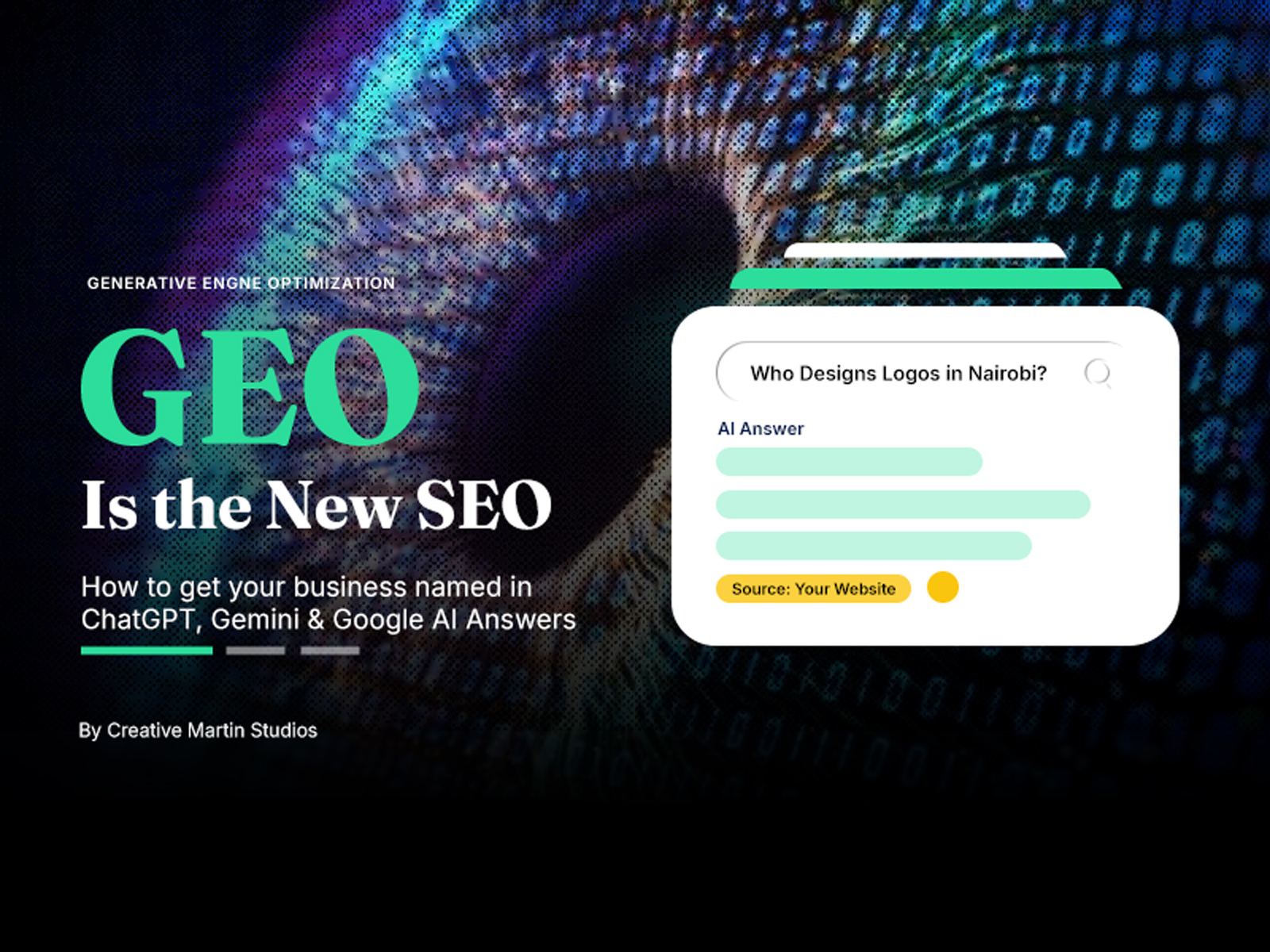
GEO (Generative Engine Optimization) is the practice of making your business easy for AI tools such as ChatGPT, Google Gemini, Google AI Overviews and Perplexity to find, trust and recommend by name. SEO helps you rank in a list of blue links. GEO helps you become part of the answer itself. With Google's AI Overviews now reaching about 2.5 billion people a month and ChatGPT used by around 900 million people every week, more customers are getting their answer before they ever click a link. That is why GEO is fast becoming the new SEO.
The good news: GEO does not replace SEO, it builds on it. A fast, well-structured website with clear, expert content is still the foundation. This guide explains what GEO is, how it differs from SEO, why it can bring better customers, and the exact steps a business in Kenya can take to get recommended by AI search.
What Is GEO (Generative Engine Optimization)?
Generative Engine Optimization is the work of shaping your website and online presence so that AI-powered search tools quote you, cite you or recommend you when people ask questions related to your business.
The term comes from a 2023 research paper by researchers at Princeton University, IIT Delhi and other institutions, later presented at the KDD 2024 conference. They tested different ways of writing content and found that the right changes could raise a source's visibility in AI-generated answers by up to 40%.
"Generative engines" are the tools that write an answer for you instead of only listing websites:
- Google AI Overviews and AI Mode: the AI summary at the top of Google results, and Google's full conversational search mode.
- ChatGPT: including its built-in web search.
- Google Gemini, Microsoft Copilot and Perplexity: AI assistants that search the web and cite sources.
You may also hear GEO called AEO (Answer Engine Optimization) or AI SEO. They describe the same goal: being the source that AI answers are built from.
GEO vs SEO: The Key Differences
SEO and GEO share the same roots, but they aim for different results.
FactorSEOGEOMain goalRank high in search resultsBe quoted, cited or recommended inside AI answersWhere you appearA list of links on Google or BingGoogle AI Overviews, AI Mode, ChatGPT, Gemini, Perplexity, CopilotWhat winsRelevant pages, backlinks, technical healthClear answers, facts with sources, expertise and a consistent brand across the webUnit of successA whole page ranking for a keywordA passage, fact or brand mention used in an answerMain measureRankings, clicks and organic trafficCitations, brand mentions, AI referral visits and enquiriesHow people searchShort keywords ("logo designer Nairobi")Full questions ("Who is a good logo designer in Nairobi for a small business?")
Why GEO Is the New SEO
The way people look for information has changed quickly, and the numbers show it:
- Google AI Overviews reach about 2.5 billion monthly users, and AI Mode passed 1 billion monthly users, according to figures Google shared at its I/O conference in May 2026.
- ChatGPT reached about 900 million weekly users in February 2026, more than double the 400 million it had a year earlier.
- When a Google AI summary appears, people click a normal search result in only 8% of visits, compared with 15% when there is no summary, according to a 2025 Pew Research Center study.
Put simply: a growing share of searches end with the AI answer. If your business is not part of that answer, many customers will never see your link, even if you rank on page one.
Why GEO Is Better Than Relying on SEO Alone
Classic SEO is still essential, but a strategy that stops at rankings is leaving value on the table. Here is where GEO pulls ahead.
1. You are recommended, not just listed
A search result puts you next to nine competitors. An AI answer often names only two or three businesses and explains why. Being one of them works like a personal referral.
2. Visitors arrive ready to act
People who click through from an AI answer have usually already compared options and read a summary. Semrush's research found the average visitor from AI search was worth about 4.4 times a traditional organic visitor, based on conversion rate. Other studies put the figure higher or lower, but they agree on the direction: fewer visits, better visits.
3. It works even when nobody clicks
When ChatGPT or Google tells someone "Creative Martin Studios designs brand identities in Nairobi", your brand has been seen and remembered even without a visit. Many of those people search for you by name later.
4. It rewards real expertise, not tricks
The Princeton GEO study found that keyword stuffing gave little or no improvement in AI answers, while adding statistics, quotations and cited sources helped the most. GEO favours businesses that actually know their subject and explain it well.
5. It covers every platform at once
Good GEO work, such as clear answers, accurate facts and consistent business details, helps you on Google, ChatGPT, Gemini, Copilot and Perplexity together. You are not optimizing for one algorithm.
How AI Engines Choose Which Sources to Cite
AI search tools do not invent their recommendations from nothing. Most of them search the web, read the top pages, and then build an answer from the sources they trust most. Your content is more likely to be used when it:
- Answers the question directly, ideally in the first one or two sentences of a section.
- Contains specific facts, such as prices, timelines, numbers and dates, rather than vague claims.
- Shows where facts come from, by naming the study, organisation or source.
- Is easy to extract, with clear headings, short paragraphs, lists and tables.
- Comes from a business the web agrees on, meaning your name, location, services and reviews match across your website, Google Business Profile, directories and social media.
- Can be crawled and indexed, because a page search engines cannot reach cannot be cited.
Google's own guidance confirms the last point: there are no extra requirements to appear in AI Overviews or AI Mode beyond being indexed and eligible to show in Google Search. The same SEO fundamentals apply.
How to Optimize Your Website for GEO: 10 Practical Steps
1. Lead every page with the answer
Start pages and sections with a clear, one or two sentence answer, then explain. For example, a pricing page should open with your actual price range in shillings rather than a long introduction about your company.
2. Write headings as real questions
Use the questions customers actually ask: "How much does a website cost in Kenya?", "How long does branding take?" AI tools match these to the questions people type and speak.
3. Add facts, numbers and sources
Replace "we are affordable" with real prices. Replace "AI search is growing" with a statistic and who published it. Specific, sourced facts are exactly what generative engines like to quote.
4. Include short expert quotes
A one-line quote from your founder or a recognised expert adds authority. The GEO research found quotations among the strongest ways to raise visibility.
5. Use lists and tables
Comparisons, prices, steps and specifications are easier for AI to read and reuse when they sit in a table or numbered list.
6. Keep your business details identical everywhere
Your business name, address, phone number, services and opening hours should match on your website, Google Business Profile, Facebook, LinkedIn, Instagram and directories. Inconsistent details make AI tools less confident about recommending you.
7. Build your Google Business Profile and reviews
For local searches such as "branding agency in Nairobi", AI answers lean heavily on Google Business Profile information and customer reviews. Ask happy clients for detailed reviews that mention the service they received.
8. Get mentioned on trusted websites
AI tools trust what several independent sources say about you. Aim for mentions in local media, industry directories, partner websites, event listings and interviews. Mentions matter even without a link.
9. Let AI crawlers reach your site
Check that your robots.txt file and hosting firewall do not block search crawlers such as Googlebot, Bingbot, OAI-SearchBot (ChatGPT search) and PerplexityBot. Blocking them can keep you out of their answers.
10. Keep your site fast and your content in text
AI tools read text, not text inside images. Put prices, services and key facts in real HTML text, keep pages fast, and update important pages when facts change. Our guide on how to make your website load faster covers the speed side step by step.
GEO for Businesses in Kenya
More Kenyans now ask ChatGPT and Google's AI questions such as "Which company can design my company profile in Nairobi?" or "How much does a website cost in Kenya?". The businesses named in those answers win the enquiry.
Many local competitors have not started on GEO yet, which makes this a real opening. A few Kenya-specific tips:
- Name your locations clearly: mention the towns and areas you serve, such as Nairobi, Westlands, Thika or Mombasa, in plain text on your website.
- Show prices in Kenyan shillings: AI tools often answer cost questions, and pages with real KES figures are more useful to quote. See our website design cost in Kenya guide as an example.
- Mention local payment options: if you accept M-Pesa, say so on your website. It is a common detail in local questions.
- Use Kenyan directories and media: listings and features on respected Kenyan sites help AI tools confirm you are a real, active local business.
How to Measure Your GEO Results
GEO is newer than SEO, so measurement is still developing, but you can track real progress:
- Google Search Console: Google has started adding reporting for its generative AI features. Read our article on the Search Console generative AI performance report to see what it shows.
- AI referral traffic: in Google Analytics, look for visits from chatgpt.com, perplexity.ai, gemini.google.com and copilot.microsoft.com.
- Manual checks: once a month, ask ChatGPT, Gemini and Google AI Mode the questions your customers ask, and note whether your business is mentioned or cited.
- Branded searches and enquiries: a rise in people searching for your business name, or saying "I found you on ChatGPT", is a strong sign GEO is working.
Common GEO Myths
"GEO means SEO is dead"
No. AI search tools rely on search indexes to find sources. If your site is not crawlable, indexed and trusted, AI tools cannot cite it. GEO is SEO plus a focus on being quotable.
"You need special AI files or markup"
Google states that you do not need new machine-readable files, AI text files or special schema markup to appear in AI Overviews or AI Mode. Structured data is still useful, but it must match what is visible on the page.
"You can trick AI into recommending you"
Hidden text, keyword stuffing and fake reviews may work briefly at best, and they put your search visibility at risk. The lasting approach is accurate, helpful content and a good reputation.
Frequently Asked Questions
What does GEO stand for in marketing?
GEO stands for Generative Engine Optimization: improving how often AI search tools such as ChatGPT, Gemini, Perplexity and Google AI Overviews mention, cite or recommend your business.
Is GEO better than SEO?
GEO is not a replacement for SEO but the next layer on top of it. SEO gets your pages found and indexed; GEO makes them the source AI answers are built from. Together they bring more qualified visitors than SEO alone.
How long does GEO take to work?
Pages that are already indexed can start appearing in AI answers within weeks of being improved. Building the wider reputation that AI tools trust, through reviews and mentions, usually takes a few months of steady work.
Can a small business do GEO?
Yes. Small and local businesses often have an advantage because they can answer specific local questions, with real prices and locations, better than large generic websites.
Does GEO work for ChatGPT and Google?
Yes. The same principles, including clear answers, sourced facts, consistent business details and a crawlable, fast website, help across ChatGPT, Gemini, Google AI Overviews, AI Mode, Copilot and Perplexity.
Final Thoughts
Search is shifting from "here are ten links" to "here is the answer". GEO is how your business becomes part of that answer. Start with a fast, well-built website, write content that answers real questions with real facts, and make sure the rest of the web tells the same story about you.
If you want a website built to be found by both Google and AI search, take a look at our web design service or start a project with Creative Martin Studios.


Comments 0
No comments yet. Start the conversation.